



ISO 9001 – Why focus on “relevant interested parties”?

Article written by Christophe Girard and Valérie Le Couedic
The concept of interested parties appeared in the 2015 version of ISO 9001, in section 4.2.
The definition of an “interested party” is explained in ISO 9000:2015: “a person or organization that can affect, be affected by, or perceive itself to be affected by a decision or activity.”
If we stick to this definition and want to meet the requirements of section 4.2, we might be tempted to create a long and exhaustive list—worthy of Prévert (sorry, Jacques!)—by identifying interested parties across all the categories illustrated in the diagram below:
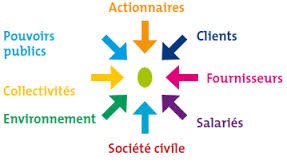
Such an approach inevitably leads to complex management of interested parties and, moreover, brings little real benefit to the company.
Two details in ISO 9001 should draw our attention and guide us toward a more pragmatic and operational approach to identifying interested parties:
-
On page 8 of ISO 9001:2015, in the diagram representing the quality system, among the inputs that shape the construction or evolution of the quality management system, customer requirements and the requirements of interested parties are shown separately; the customer is therefore considered by default as a permanent interested party. This point is confirmed in ISO 9000:2015, clause 2.4: “The concept of interested parties extends beyond the customer alone.”
-
Clause 4.2 mentions the notion of relevant interested parties; therefore, the goal is not to identify all possible interested parties, but only those that will either help the company progress or may hinder the achievement of its objectives.
Based on this, it may be useful to distinguish three categories of interested parties:
- Permanent interested parties, which include customers and existing suppliers;
- Potential interested parties, which can be listed using the diagram referenced above;
- Relevant interested parties: the permanent ones plus those selected from the potential interested parties, based on their role in achieving the company’s objectives.
From there, a method must be proposed to identify relevant interested parties.
EURO-SYMBIOSE recommends starting with the determination of internal and external issues—required by clause 4.1—and identifying, on this basis, the main challenges to be addressed and the interested parties that may help overcome these challenges or hinder the associated projects.
Some examples are provided in the table below:
Example of a challenge identified through context analysis |
Positive (+) or negative (-) influence of stakeholders |
Possible example of a stakeholder associated with the challenges to be addressed |
Need to develop new technology |
+ | University xxx
Partnership with company YYY |
Recruitment difficulties |
+ | France Travail
AFPA |
Need to expand in urban areas with a risk of nuisance |
– | DREAL
Community of municipalities Town hall Local residents |
The objective of this identification exercise is therefore not to draw up an exhaustive list of stakeholders, but rather to select only those who can play a specific role at a given time and in a given context, with this list evolving over the years. The specific actions to be taken with these stakeholders will then need to be defined.
This approach makes it possible to meet the requirements of Chapter 4.2 with in-depth considerations directly related to the company’s concerns.
Are you interested in this topic and would like to learn more?
EURO-SYMBIOSE is available to assist you in developing your practices in this area.
📞 Our teams are here to listen and support you, ready to meet your needs:
France: +33 (0)2 51 13 13 00 – service.clients@euro-symbiose.fr
Morocco / Tunisia: +212 (0)6 91 00 06 46 – service.clients@euro-symbiose.ma
